This is an online collection of many small but important things in my life. Observations, collections, craft, food,fun............ Nothing grows alone so this website is a record of everything growing in my life.
Wednesday, 3 February 2021
Compost is the key.
Sunday, 6 December 2020
Diversity
It then comes back at you tenfold -better drought resistance, healthy stock, good water absorption and retention and as amazing bird and insect life above ground. Such a beautiful place to be!!
We have a diverse range of tree/shrub species to feed the different types of fungi, birds and insects and our 'big' livestock in times of drought or when they can reach. These also give us materials for building, and making baskets, charcoal, fire starters, mushrooms, mulch, fruit and nuts........and shelter when we need it.
Our pastures are diverse too this one has; Chickory, 4 types of clover, birdsfoot trefoil, yarrow, 2 plantains, dandelion, foxtail, perennial rye, yorkshire fog, paspalum, dock, buttercup, comfrey, jerusalem artichoke, ............
Pulsing animals through this system supercharges it.
Thursday, 4 June 2020
Kereru
Wednesday, 22 April 2020
Cricket song
These guys sing as they munch on the roots and shoots of your plants.
This is an introduced cricket. It is much bigger than its native cousin.
They love hot dry summers when the ground cracks and plants get stressed.
Stressed plants send out signals to call in the clean up crew.
Crickets can damage already stressed crops badly.
Cooler evenings close the cricket chorus for the year. It is
Monday, 6 April 2020
Cold wasps
Thursday, 6 February 2020
Summer chorus
Cicadas sing all day long here in summer.
They are sap suckers and also tree pruners who damage small branches when they lay there eggs -this damage makes the branches susceptible to snapping in the wind.
They suck sap from plant roots in there nymph stages and then move above ground when they emerge in late spring.
This one is enjoying some corn.
Friday, 31 January 2020
Sharing
This bumble bee and Copper butterfly.
Often sedum plants have a wide variety of pollinators all at once..
They are an easy care perennial plant that is easy to divide and spread around your garden
Thursday, 25 July 2019
Pototoes
Dreaming or potatoes. Step one broad fork. Step two add compost. Step three roll out straw. Step four wait until the weather warms. Step five add the chickens (this was not planned but the slugs loved the straw soo much -and the chickens loved the slugs).
Step six will be plant the potatoes under the straw.
Thursday, 2 May 2019
Turning compost
Monday, 11 February 2019
Vermicast
Vermicast -or some would say liquid gold.
I am adding more and more carbon to my worm farms to try and encourage a much more fungal dominated cast.
From this I then make, seed treatments, compost teas and slurries, potting mix, and compost for planting.
Tuesday, 24 April 2018
Convolvulus Hawk Moth Caterpillar
Monday, 2 April 2018
Winter cover up
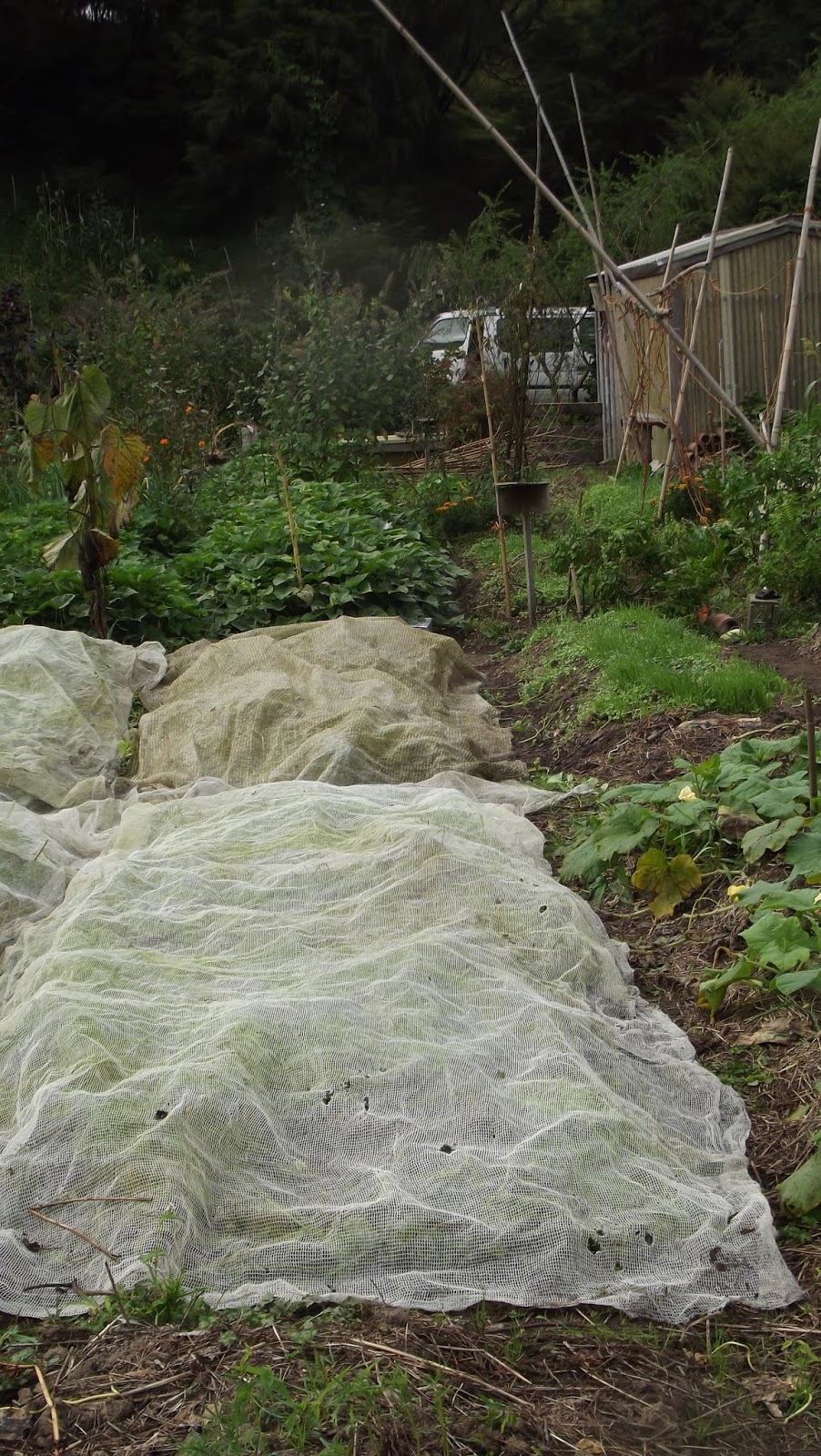
As I harvest in the autumn a cloak of green manure is sown to cover any bare earth.
This cloak will;
-out compete weeds,
- keep fungi strong (as the mycellium can only stay alive for a short time in the soil without their host -plants),
- maintain a good soil structure by stopping weathering, holding soil together with roots and those of fungi they host,
- providing shelter for soil insects, food for decomposers like worms when mulched and provide nutrients/mulch for next springs plantings (this green manure is lupin and broad beans for corn crops).
Wednesday, 31 January 2018
Caterpillars
Wednesday, 20 December 2017
Honey harvest
If we harvest before Christmas we can be sure there will not be poisonous Tutin in our honey. This stuff can be eaten straight from the comb.
Passion vine hoppers suck the sap from the Tutin bush and then in turn bees harvest honeydew from the hoppers. This is especially true during hot summers so after Christmas all honey harvested needs to be tested.
As bees categorize nectar as they store it in their hives then Tutin honeydew can be concentrated in small areas of the comb. After Christmas comb honey is a no go.
Thursday, 14 September 2017
Entrance transition
I'm loving the path to the garden at the moment.
You transition off our drive under the Tagasaste (which is full of Bees, Bellbirds and Kereru), past the Grapefruit, over the drain and you feel there before you even open the gate.
The narrowing of the path (off the drive), preview of destination and sense of slowing down or arriving always invites me whether I am driving past, going to work or passing through to gather food for a meal.
Friday, 1 September 2017
Bug houses
As small gardeners start awakening in spring I always try and keep one step ahead with nesting places.
This bug hotel is made especially for mason bees, potters wasps, ladybirds, and lace wings.
Next week I really need to make a few bumble bee nests.
Sunday, 13 August 2017
Compost trenches
A lot of my garden beds have trenches down the middle. These are filled with stalks from my carbon crops, and then seaweed, animal manure, wood ash, leaves, weeds............ depending on specific crop needs and what I have at hand.
In-situ composting that creates a diverse habitat for the many decomposers in my garden, feeds my plants and holds onto moisture.
Wednesday, 9 August 2017
Pest patrol
I love working with my ducks. They have been busy cleaning up slugs and snails while I get some of my beds ready for spring.
Saturday, 29 July 2017
Queen bee
Could not capture the Queens but look at the early season Tagasaste flowers that are feeding them.
On these fine winters days you often get Queen Bumble bees coming out of hibernation for food. Tagasast sre one of htese important food sources.
Wednesday, 11 January 2017
Peripatus
People think this amazing creature is a link between worms and centipedes.
And we found one while digging on the garden track.